


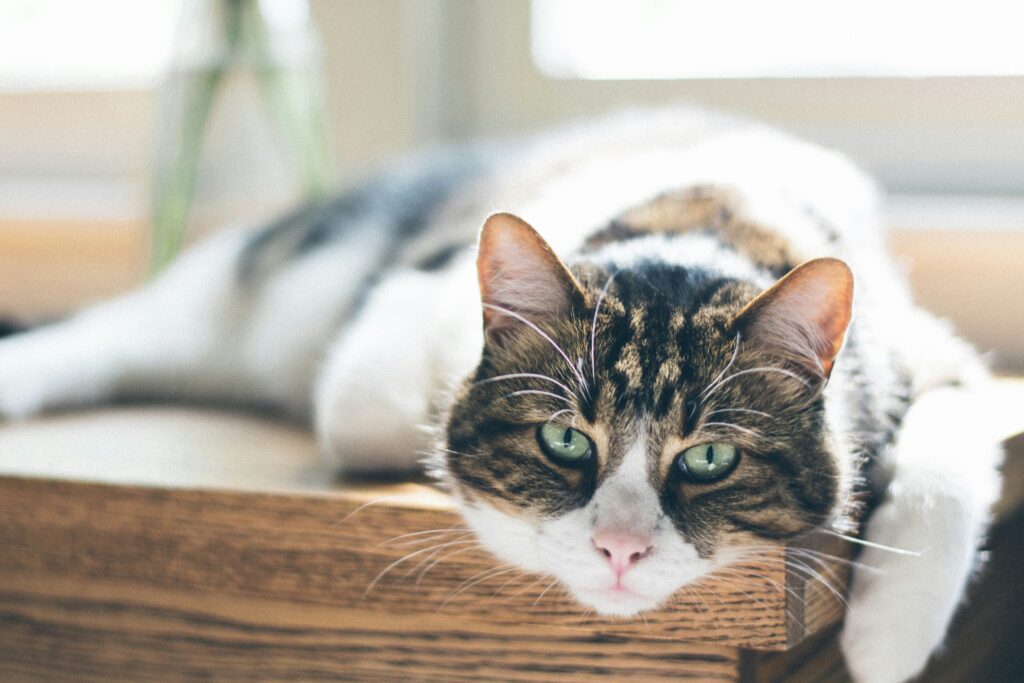
There is a phrase we hear all the time about senior cats:
“They’re just getting old.”
They don’t jump onto the bed anymore.
They’re sleeping somewhere different.
They’ve lost some weight.
They’re suddenly picky about food.
They’ve started going outside the litter box.
And because we know our cats are getting older, it’s easy to explain the change with their age.
But age is not a diagnosis.
Aging does change our cats. Their bodies change. Their abilities may change. Their preferences and needs can change too.
But a change is still information.
And one of the most valuable things we can do for a senior cat is learn to ask a very simple question:
What changed?
Cats Don’t Always Show Pain the Way We Expect
Cats are very good at hiding pain.
And even when they do show us that something hurts, feline pain often doesn’t look the way people expect pain to look.
A cat experiencing discomfort may not cry or develop an obvious limp.
Instead, you might notice that your cat:
- hesitates before jumping onto a favorite surface
- stops climbing somewhere they used to go regularly
- sleeps in a different location
- becomes less active
- changes the way they groom
- becomes less tolerant of being touched or picked up
- starts having difficulty getting into the litter box
Individually, these changes can seem small.
That is exactly why knowing your individual cat matters so much.
Don’t Compare Your Senior Cat to Other Senior Cats
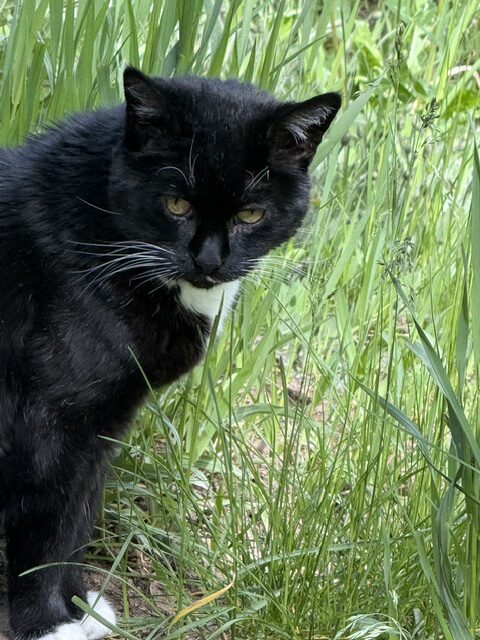
My cat Princess Leia is 18, going on 19.
She has arthritis and hip dysplasia.
She also still jumps onto things as though no one has bothered to explain her age to her.
Her brother Skywalker was very different.
When Skywalker was about 14, I noticed that he was limping. X-rays showed arthritis in his knees and hip area.
That started a long search for something that would help him.
I researched supplements, medications and other therapies. I tried acupuncture and cold-laser therapy. I tried Solensia. Nearly every supplement I tried made him vomit, and the first Solensia injection made him sick.
Some of those things can help other cats.
They weren’t helping Skywalker.
Eventually, I learned one of the most important lessons he would teach me about caring for a senior animal:
The goal isn’t to find what works for senior cats. It’s to find what works for the senior cat in front of you.
When “How Do I Fix This?” Becomes “How Can I Make This Easier?”
Skywalker’s arthritis was actually part of what pushed me to learn more.
I eventually enrolled in a science-based Feline and Canine Nutrition certification program through Southern Illinois University. While studying arthritis, I was surprised by how much of the available material focused on dogs.
It reinforced something I was already learning firsthand: feline pain and mobility problems have historically been easy to overlook.
And after trying so many different things for Skywalker, my question gradually changed.
Instead of continually asking:
How do I fix this?
I started asking:
How can I make his life easier?
That question opened up an entirely different kind of care.
I added ramps and steps to help him reach places he loved.
I bought him an orthopedic bed.
I made parts of his environment easier to navigate.
And after all the research and treatments I tried, one of Skywalker’s favorite comforts turned out to be remarkably simple:
Warmth.
He loved a comfortably warm microwaveable heat pad near his sore hips and knees. I tested it carefully, kept a towel between the heat source and his body, and made sure he could always move away.
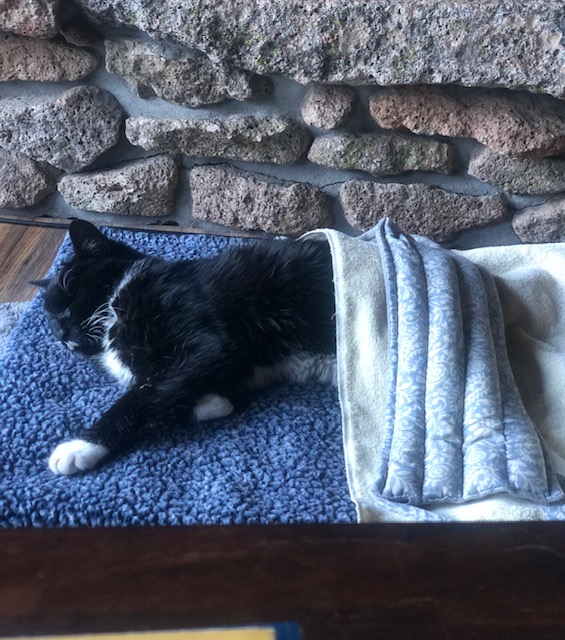
Princess Leia, naturally, hates it.
Same home. Similar condition.
Different cats.
That’s why adapting a home for a senior cat doesn’t have to mean buying every product marketed for aging pets.
Sometimes good senior-cat care is simply about removing an obstacle.
A small step can make the bed accessible again.
A ramp can preserve access to a favorite window.
A nonslip surface can make walking easier.
Moving food or water can eliminate an unnecessary trip up the stairs.
These aren’t ways of taking independence away from an aging cat.
They’re ways of helping them keep it.
Sometimes the Litter Box Is the Problem
As Skywalker’s mobility changed, he also started going outside his litter box.
So I bought him a low-entry litter box.
This is an important shift in perspective:
Sometimes the problem isn’t that a senior cat won’t use the litter box. The litter box may no longer work for the senior cat.
Of course, changes in elimination can have many medical causes, which is why a new litter-box problem deserves veterinary attention.
But the environment deserves attention too.
Can your cat comfortably step over the entrance?
Do they have to navigate stairs to reach the box?
Is the box far away from where they spend most of their time?
Is the floor around it slippery?
A litter box that worked perfectly at age 8 may not work perfectly at age 16.
The cat didn’t fail the environment. The environment may need to change for the cat.
A Senior Cat Can Be Eating – and Still Be Losing Weight
Another change I watched happen with Skywalker was gradual weight and muscle loss.
What made it especially difficult was that he was still eating normally.
I tried different foods and different approaches to help him maintain his weight and muscle, but he continued getting thinner.
Princess Leia has had a completely different experience. She has maintained around 13 pounds for years.
Again, don’t compare your senior cat to another senior cat.
Compare them to themselves.
Gradual changes in body weight and muscle can be difficult to notice when we see our cats every day. Regularly tracking a senior cat’s weight can help make those changes easier to spot.
Unexplained weight loss or muscle loss deserves attention – even when a cat still appears to be eating normally.
Appetite changes deserve curiosity too.
Senior cats may develop different preferences around food. Texture can matter. Gently warming wet food can enhance its aroma and make it more appealing.
And smaller, more frequent meals more closely reflect the way cats naturally evolved to eat – multiple small, prey-sized meals throughout the day rather than one or two large meals.
But when your cat’s appetite changes significantly, start with the same question:
What changed?
Don’t assume they’re simply becoming picky because they’re old.
When the Brain Changes Too
Later in Skywalker’s life, he developed cognitive decline.
He could get himself stuck almost anywhere.
Corners.
Behind furniture.
Little spaces he could enter but couldn’t quite figure out how to leave.
So his environment changed again.
I put baby gates in front of stairs. We blocked off places where he repeatedly became stuck. We tried to make his home easier and safer for him to navigate.
Changes such as confusion, altered sleep patterns, nighttime vocalization or getting lost in familiar places deserve veterinary evaluation because cognitive changes can overlap with other medical conditions.
But there was another lesson in that stage of Skywalker’s life that mattered just as much to me.
He was still Skywalker.
He was still cute.
Still such a good boy.
And he still absolutely loved being held.
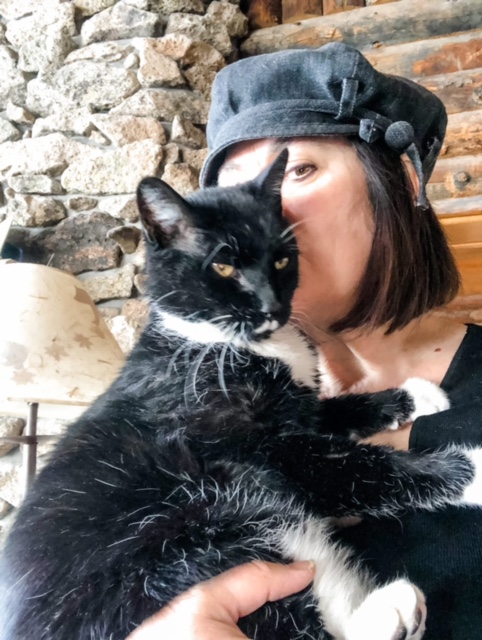
He would curl up in my arms and fall asleep.
His cognitive decline changed some of the things he could do.
It didn’t change who he was.
Notice → Get Curious → Investigate → Adapt
We can make senior-cat care incredibly complicated.
Skywalker taught me to bring it back to something simpler.
Notice
Know your cat’s normal.
How do they move?
Where do they sleep?
How much do they eat?
What do they weigh?
Where do they spend their time?
How do they interact with you?
Get curious
When something changes, resist immediately explaining it with age.
Ask:
What changed?
Investigate
Some changes need veterinary evaluation.
Pain, dental disease, kidney disease, hyperthyroidism, gastrointestinal disease, hypertension and other medical conditions can all affect the way a senior cat behaves, eats, moves or interacts with their environment.
Finding the reason matters.
Adapt
Not everything can be cured or reversed.
But there is often something we can make easier.
Change the environment.
Reduce the barriers.
Move the resources.
Add the step.
Try the different bed.
Pay attention to what your cat actually chooses.
Individualize
Princess Leia isn’t Skywalker.
Skywalker wasn’t another senior cat I read about.
And your cat isn’t either of them.
Care for the cat in front of you.
And Don’t Forget to Cherish This Part
There is something else I don’t want to lose in all this talk about health and aging.
The senior years can be incredibly precious.
When you’ve shared many years with an animal, you know each other in a way that’s difficult to explain.
You know their routines.
Their little sounds.
Their favorite places.
The expression that means they want something.
The peculiar habits that are completely ordinary to you and completely unique to them.
As they grow older, caring for them may become more hands-on.
You might add a step beside the bed.
Prepare their food differently.
Help them reach somewhere they used to reach on their own.
Make their world work a little better for the body they have today.
Their needs may change. And we can change with them.
Skywalker lived for nearly three years after I first noticed that limp.
He was 17 when I eventually had to say goodbye.
Even toward the end, when he was confused and needed more help, he still wanted to curl up in my arms and sleep.
And when it was finally time to say goodbye, that’s where he was.
In my arms.
Skywalker didn’t teach me how to stop a cat from getting old.
He taught me how important it is to keep noticing them while they do.
Your senior cat doesn’t need you to make them young again.
They need you to notice who they are now.
And if you’re fortunate enough to share these years with them, don’t miss how precious they are.
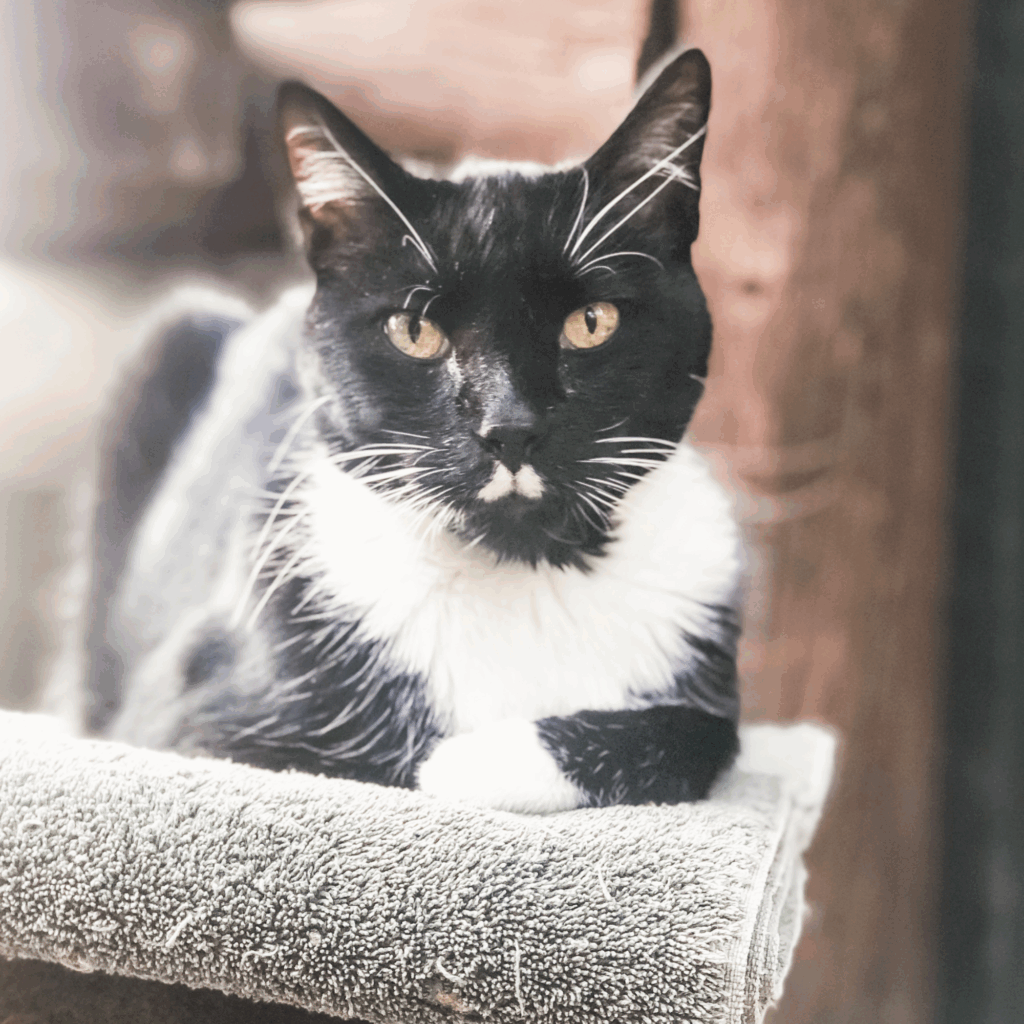
In Loving Memory of Skywalker
2008-2025
🎥 Prefer to watch?
Watch Your Senior Cat Isn’t “Just Getting Old” on the Animal Impact Hub YouTube channel.
Want more ways to enrich your cat’s everyday life?
Download the free 5 Ways to Add More Enrichment to Your Cat’s Day guide.

